



Engineering and technology

Building the technology that powers quantitative research.

At G-Research, our engineers build the platforms, infrastructure and AI/ML systems that are solving some of the hardest problems in quantitative finance. The research works because the engineering does, and that is seriously difficult work.

Young blonde woman smiling looking to the side wearing a black turtleneck against a plain white studio background
Why join our team
Industry-leading compensation
A culture that supports your success
Talent development
Relocation support
Comprehensive benefits
Industry-leading compensation
Talent development
A culture that supports your success
Relocation support
Comprehensive benefits

What does engineering at G-Research involve?

Research at G-Research’s scale requires infrastructure that can:

  • Process vast datasets reliably
  • Run thousands of experiments in parallel
  • Support large-scale machine learning workflows
  • Move validated ideas into production without losing what made them work
  • Treat performance, latency, throughput and reliability as core requirements

Our engineering teams build and maintain all of it. Engineering here also means inheriting complex, high-value legacy systems and making them better: a harder and more interesting problem than starting from scratch.
Quantitative engineering

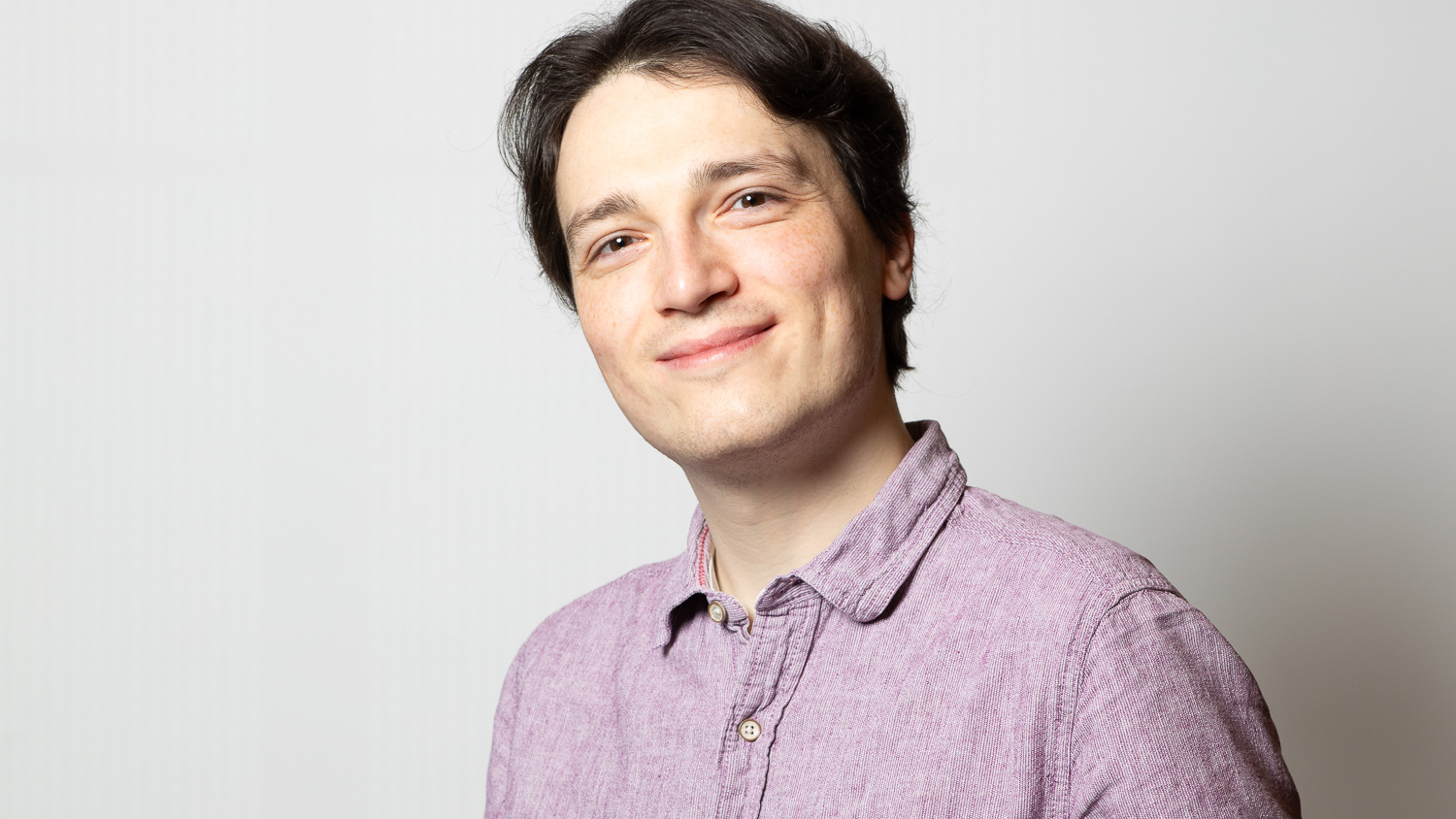
Quantitative engineers (also called research engineers) sit closest to the research itself – working directly with our quant research team to turn ideas into production systems.

The core stack is C# and Python, and day to day you might be working on low-level performance optimisations in our core simulation engine, re-architecting systems to give ML models a cleaner path from research to production or enabling large-scale distributed training.
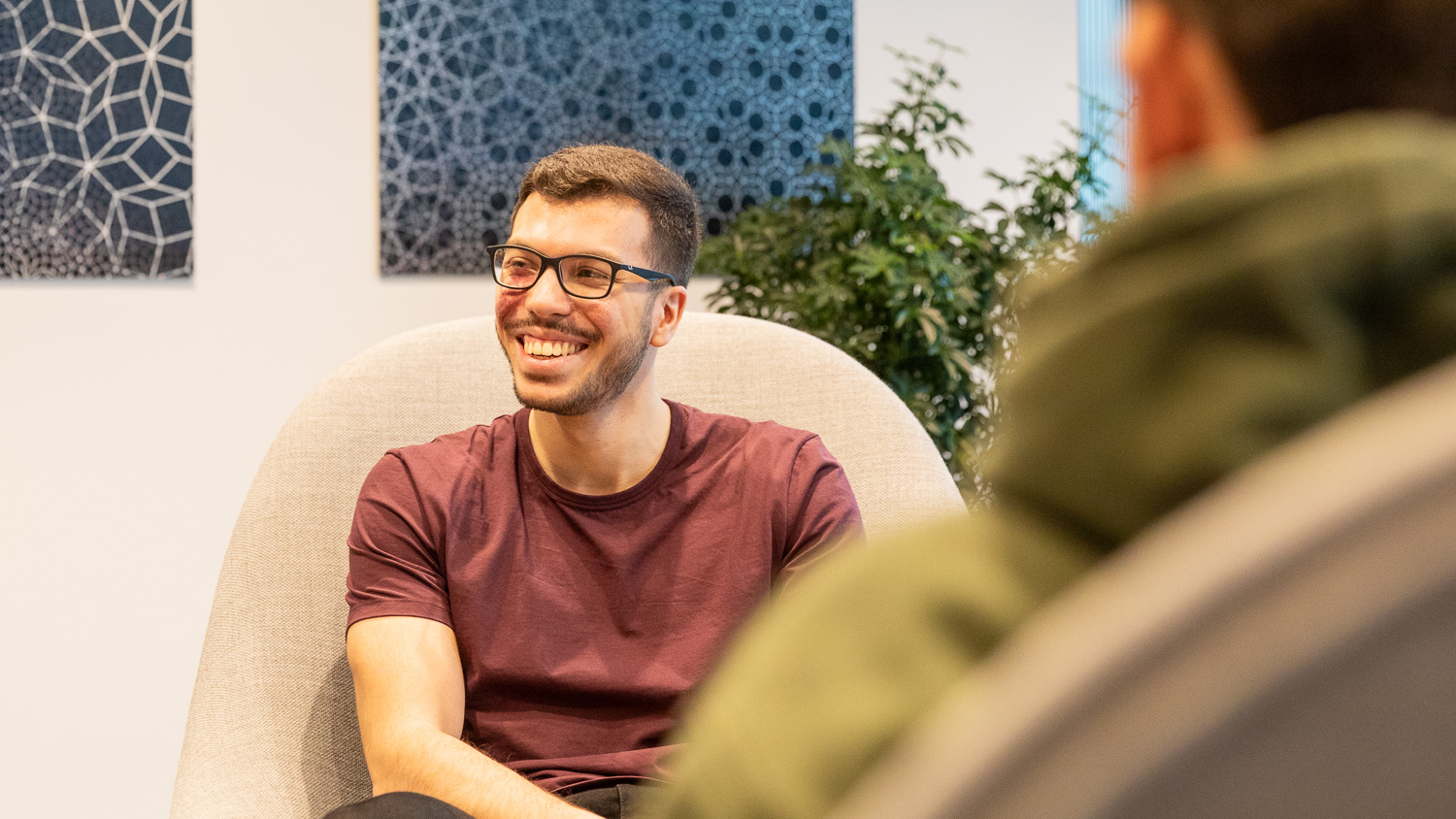
Young man wearing glasses smiles while seated in an armchair conversing with a blurred person in the foreground office setting with plant and patterned wall art

Infrastructure engineering

Our infrastructure handles extraordinary volumes of data every day. Keeping it fast, reliable and scalable is a discipline in itself. Infrastructure engineers work across Kubernetes, OpenStack and more, while also running a dedicated open-source programme that maintains projects including Armada and GitProxy.

If you care about the open-source community as well as production engineering, this is an unusual place to do both.

Chessboard with two seated players concentrating a standing man observing in a modern office with tall plants a window overlooking a city skyline and casual coats on a chair

Who should apply?

This team is for engineers who want their work to matter and their problems to be hard. You could be a good fit if you:

  • Enjoy building well-engineered software for complex technical environments
  • Want to work closely to research, data, infrastructure or ML systems
  • Have experience in C#, Python, C++, infrastructure, platform engineering or related areas

Prior finance experience isn’t required, but an interest in the area you’ll be working in always helps.
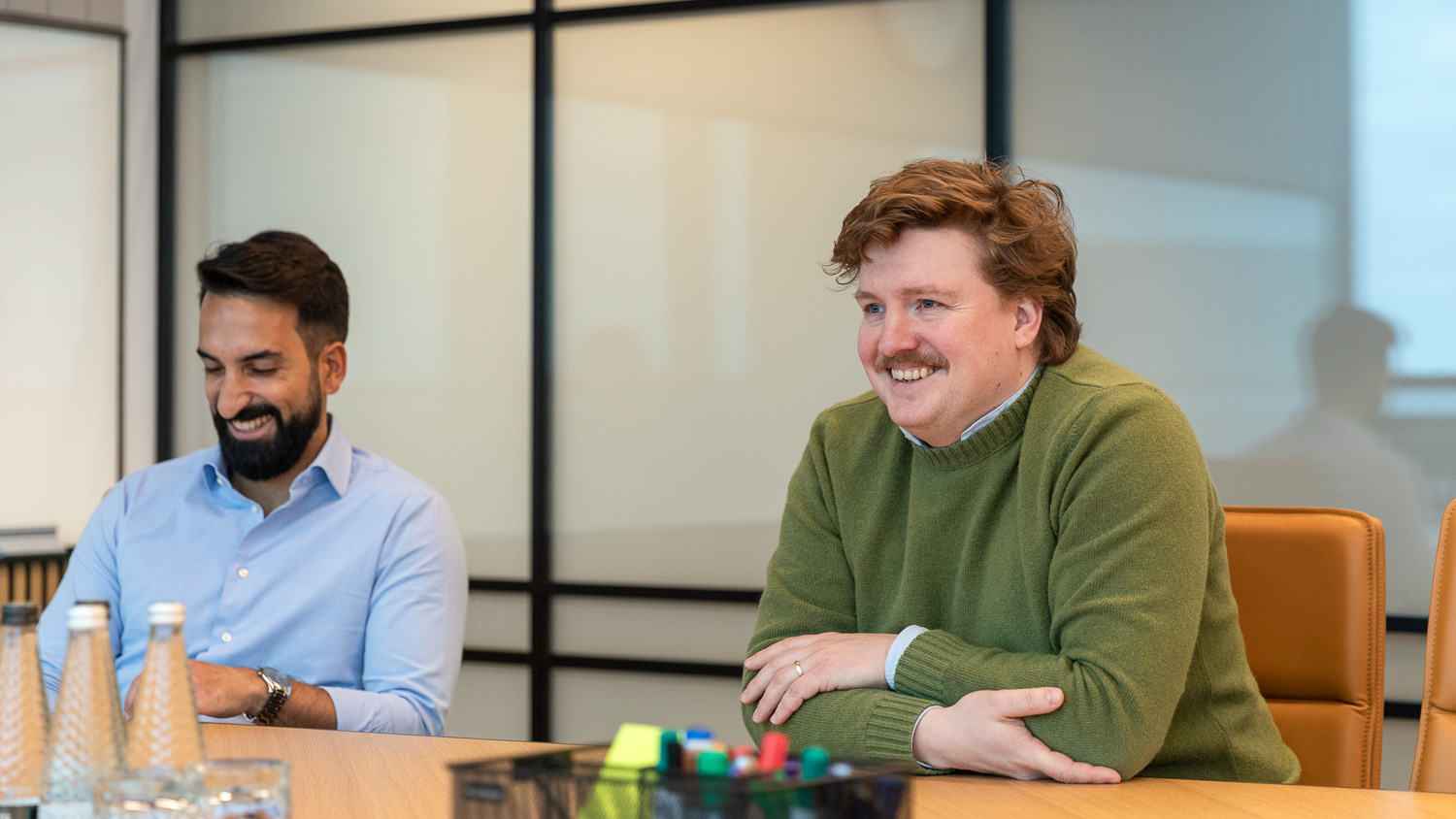
 

Quantitative developers and machine learning engineers at G-Research

Finance is interesting from a machine learning perspective. It's one of the few industries in the world where you basically have an untapped, unlimited source of data. We try to predict stock prices based on data. Basically, 100% of my day involves ML and systems engineering. Basically, no finance is required. When you apply ML to finance, you're basically doing weather forecasting. Solving very interesting challenges every day on the boundary between both machine learning as well as software engineering. It's actually not that different from a lot of the frontier AI labs. We work with researchers who develop these machine learning models, so they need lots and lots of data, and lots and lots of compute, and we apply it to predicting the future of financial markets. In our team, we have people from various kinds of backgrounds. We have software engineers, for example, coming from gaming industry or, for example, we have people coming from banking. Financial knowledge is not required. Financial curiosity is definitely an asset. But what really matters are software engineering skills, statistics, linear algebra, and the foundation of machine learning. Machine learning engineers and quant developers both have very important roles, and they do overlap. The machine learning engineers, those are the guys that will sit with the quants and ensure that their workflows are fitting the best possible models and running their training the most efficiently. Whereas the quant developer is more incorporating the researcher's new models into the existing trading platform. We had an idea that we knew was valuable, but it was taking a really long time to train the models, and so I had to go away and learn how to write custom GPU code and build TensorFlow from source. Go from not knowing how to write any GPU code to writing a kernel or a GPU program that was more efficient than what was in the very public machine learning library. Every single model that comes out, it's unique in some weird and wonderful way. You feel like you've had direct involvement in delivering the new research models. That one's particularly exciting. It's actually insane how much care we have for each other. When you do something right, it can be something tiny and you just fixed it for your sake, and then I'll tell you at a team meeting, being like, "Oh, by the way, Julia fixed it." Having this access to this incredible compute resource means that we can spend longer thinking about things and less long waiting for results to come back, which is amazing. So I've got this new feature that I want to test out. I will turn it on, and then by tomorrow morning, I've got my same results and I can look at the pretty graphs and determine whether I've made money or lost money in a straight line. We look for a spark, someone who is going to be proactive in finding the right work. We have no strong preferences when it comes to any particular tools or technologies that you need to work with. It's mostly about the algorithmic thinking. We will frequently give candidates the option of what language they want to choose. I had one the other day where someone succeeded in answering one of our quant dev interview questions in C++, so you can do it. I found the interview process really comprehensive. Multiple stages, and I look at it as a positive because everybody who had to go through a similar process is going to be quite skilled and very nice to be working with. It's very hard for me to imagine a place with a higher concentration of clever, incredibly talented people. I learn from each of them every day. I admire all of them. You shouldn't really be afraid to apply to G Research. You will be able to work with people who are very passionate about trying to solve this problem, of trying to create the best predictor in the entire world with such motivated and brilliant people.
Open video transcript

Benefits that support serious engineering

Building reliable systems at scale takes focus. We support that work with highly competitive compensation, an annual discretionary bonus scheme and benefits designed for life inside and outside work. From generous annual leave to comprehensive healthcare, our benefits help engineers do their best work over time.

View Benefits
Our Benefits

Our benefits are designed with our people in mind, with a wide range of flexible options tailored to your needs.

Finance
  • Company pension scheme
  • Annual discretionary bonus scheme
  • Season ticket loan
  • Give as you Earn (GAYE)
  • Risk protection benefits
  • Charity fundraising matching scheme
  • Generous relocation and immigration assistance
Health
  • Comprehensive private health insurance, including GP access, dental and vision
  • Enhanced health support for male and female health, fertility, family forming, maternity and menopause journeys
  • Healthcare cash plan covering a wide range of routine and complimentary healthcare expenses
  • Employee Assistance and Wellness Programmes
Lifestyle
  • 30 days’ annual leave, with an extra five days for those who are office based
  • Enhanced leave polices to support our people and their family needs
  • Back-up dependent care for children, adults and pets
  • Complimentary travel insurance for our people and their families
  • Cycle schemes
  • Gym and Fitness membership subsidies
  • Free lunch and complimentary barista bar
  • Regular company socials
  • Informal dress code and excellent work-life balance
  • Talks from world-class guest speakers
We want benefits to work for our people and use a flexible benefits platform to support this – colleagues can opt-in or out of certain benefits and can customise cover levels depending on their lifestyle and personal needs.
View our open roles

What our people say

An image of Mario
Mario FPGA Manager

"While some people might think working in finance may not be too exciting, at G-Research, it is, especially if you see it as a problem to solve. How do we solve this algorithm? How do we get faster? This is why I think people are really excited to work here."
Find out more
An image of Alexander
Alexander Software Engineer

"I've felt very lucky to work with teams of people across the business who are generous with their time, knowledge and ideas as we collaborate to continuously build and rebuild complex systems with lots of moving parts."

Find out more
An image of Mia
Mia Software Engineer

"What I appreciate most about working in G-Research is the supportive and knowledgeable environment. Everyone is incredibly helpful and patient, which ensures there’s a good balance between being challenged and your workload."
Find out more
An image of Dexter
Dexter Software Engineer

"Work culture is an important aspect for me, so when I was contacted by G-Research I discovered a company where I could grow as a developer, whilst feeling like the company valued me as a person, not just a code monkey."
Find out more
An image of Neil
Neil Corporate IT Manager

"My favourite part of working for G-Research is that technology is at the heart of everything we do at the company, driving the business forward and enabling us to stay ahead of the competition."

Find out more
An image of Owen
Owen Software Engineer

"Before G-Research I’d completed internships at a few companies whilst studying Computer Science at the University of York. Since joining, I’ve progressed from an intern to a graduate to an engineer, having worked on systems and technology core to the business my entire time."

Find out more
An image of Sokratis
Sokratis Software Engineer

"My favourite part of working at G-Research is the people, from my colleagues to our customers. The culture is great and encourages collaboration, which makes it easier for everyone to work together."
Find out more
An image of Ross
Ross Cloud Engineering Manager

"My favourite thing about working here is the people. G-Research strives to hire not only the brightest minds, but good people, which in turn creates a brilliant collegiate and social atmosphere at the company."

Find out more

Tech stack and our working environment

  • Our engineering teams work with a range of languages, platforms and tools depending on the role and team
  • Primary languages and tools: C#, Python, C++, Kubernetes
  • Compute and infrastructure: High-performance computing, cloud platforms, OpenStack, grid computing and scalable storage
  • Data and research platforms: Tools and systems that help researchers work with large datasets and test ideas quickly
  • Engineering practices: Technical design, peer review, testing, automation and maintainable code
  • Specialist areas: Machine learning infrastructure, low-latency systems, developer tooling, production systems and trading technology
View engineering roles

Assessment process for engineering

Our engineering assessment process is designed to understand how you approach technical problems, design reliable systems and communicate your thinking. The process varies by role, but it typically takes two to three weeks end-to-end.

Online application

Our assessment process kicks off with our Talent Acquisition team, who will review your application and assess your fit for the role.

Stage one: Technical interview

You will either meet a team member or take a remote test, giving you the chance to demonstrate your technical abilities.

Stage two: Behavioural interview

We will set technical skills aside and focus on getting to know you.

Stage three: Further technical interviews

Here, we will take a deeper dive into your technical skills and competencies.

Stage four: Management interviews

The final stage of our interview process is where you will meet members of your team, your future manager and functional leadership.

What is the working style for engineering teams?

Engineering at G-Research is collaborative, practical and close to the research. Our engineers build reliable platforms, tools and infrastructure for quantitative research at scale, with a focus on clear design, peer review, testing and maintainable code.

You can expect to work close to the problem, make meaningful technical decisions and build systems designed for performance and reliability.
Frequently asked questions

What kinds of technical problems do employees work on?

Engineers might be improving how data moves through the business, making compute more efficient, building tools that shorten the path from idea to experiment or designing systems that can keep pace with demanding research workloads. It is less about building standard software from a fixed brief and more about creating the technical environment that lets research teams ask bigger questions.

What is the engineering culture like?

Our engineers are encouraged to challenge designs, question assumptions and care about the long-term shape of the systems they build. The culture is also highly collaborative. Good engineering here means more than writing strong code; it means understanding the research context, communicating clearly and making decisions that help complex technical work hold together over time.

What is a typical working day at G-Research for software engineers?

There is no single typical day, which is part of the appeal. Depending on the team, an engineer might spend the morning designing a new service, reviewing code, debugging a performance issue, discussing requirements with researchers or improving the reliability of an existing platform. Some days are about building something new; others are about making an important system faster, safer or easier to use.

Take the next step in your career

Looking to make an impact at one of the world’s leading quant and technology firms? See our open engineering roles here.

Latest events

  • Quantitative engineering
  • Quantitative research

Melbourne quant challenge 2026

30 Nov 2026 University of Melbourne, Alan Gilbert Building
  • Quantitative engineering
  • Quantitative research

Canberra quant challenge 2026

02 Dec 2026 University of Canberra
  • Mathematics

Pub Quiz: Sydney

04 Dec 2026 Upstairs at Foresters, 336 Riley Street

Other teams

Quantitative research & machine learning

We find patterns in noisy, real-world datasets to predict movement in financial markets.
Learn more
Technology Innovation Group

We identify, test and on-board the latest tech, enabling our researchers and engineers to keep innovating.
Learn more
Open-source software

We partner with and invest in the open-source community.

Learn more

Stay up to date with G-Research

Join our talent network

Be the first to hear about new roles and opportunites to join our team.
We’re hiring engineers!

Want to make an impact and have a say in what gets built? Take the next step in your career.

View our open roles